The Institute of Agency Science
Governance & independence.
How the Institute of Agency Science is being built to stay independent of its own founder, and the test by which to judge whether it does.
The Institute of Agency Science is being built to be an independent standards body, and the single test of that independence is whether it ever rules against its own founder.
The Institute of Agency Science is being established as a 501(c)(3). Every governance instrument on this page is planned, required by charter, or provided for, not yet executed; no board member is seated or named.
Independence is the moat, and the test is a behavior, not a promise
A founder-started institute cannot prove its independence by asserting it. It can only be judged by what it does under pressure: whether it ever publishes a finding, or refuses a use, that costs the people who would benefit from the opposite ruling. The Institute is being built so that this is not merely allowed but structurally unavoidable. The honest answer to the hardest question, how can a founder-started institute be independent?, is that it is being built to be independent; judge it by whether it ever rules against the founder.
Until the entity is formed, an independent board majority is seated, and the license is executed, independence is a chartered commitment, not an operational fact. The honesty about that gap is part of the moat.
Independent Board
The independent board (required by charter; formation in progress).
The Charter requires an independent board majority of three or more non-family members; board formation is in progress. The board is the instrument of independence: it is the body provided for to approve any arm's-length license to the commercial side, to seat the governance the Charter requires, and to hold the powers below without commercial veto. No board member is seated and named yet, and none will be named on this page until one is actually seated.
This is stated as it stands. A planned standards body that named a board it did not yet have would forfeit the one asset it is built on. The board is described here as required and in formation, never as seated or governing in the present tense.
Continue: Read the Charter
Founder Sunset
The Founder Sunset clause.
The founding instruments provide for a Founder Sunset clause that time-bounds founder control of the Institute, so that authority over the standard passes to the independent board rather than resting with the founder in perpetuity. It is paired in the founding instruments with the requirement for an independent board majority of non-family members. The Sunset clause is provided for, to be executed at formation; it is described here as it is being drafted, not as an accomplished fact.
Continue: Read the Charter
Independence Provisions
The independence provisions, written into the founding instruments.
Independence is designed into the structure, not asserted in prose. Three provisions, provided for and to be executed at formation, give the words their teeth:
- The Institute owns its own name. The service mark "The Institute of Agency Science" is to be owned by the Institute itself, not by the commercial holding entity, because a standards body that did not own its own name could not credibly govern the standard. The Institute owning its own name is the cleanest possible neutrality signal.
- No back-license. The founding instruments provide for a no-back-license clause: intellectual property the Institute creates does not auto-vest in the commercial holding entity, and any commercial use of Institute-created work requires an arm's-length license approved by the independent board.
- License survival. A survival clause is provided for, so the standard's license survives the death, sale, restructuring, or bankruptcy of the commercial side. The standard outlives any single company.
The binding backstop, also written into the founding instruments: neither the commercial holding entity, the founder, nor any commercial affiliate may compel, condition, or retaliate against the Institute for exercising any of the authorities on this page. Certification criteria, ethical standards, and refusal domains are to be set without commercial veto.
Continue: Read the Charter
Negative Finding Power
The power to rule against the founder.
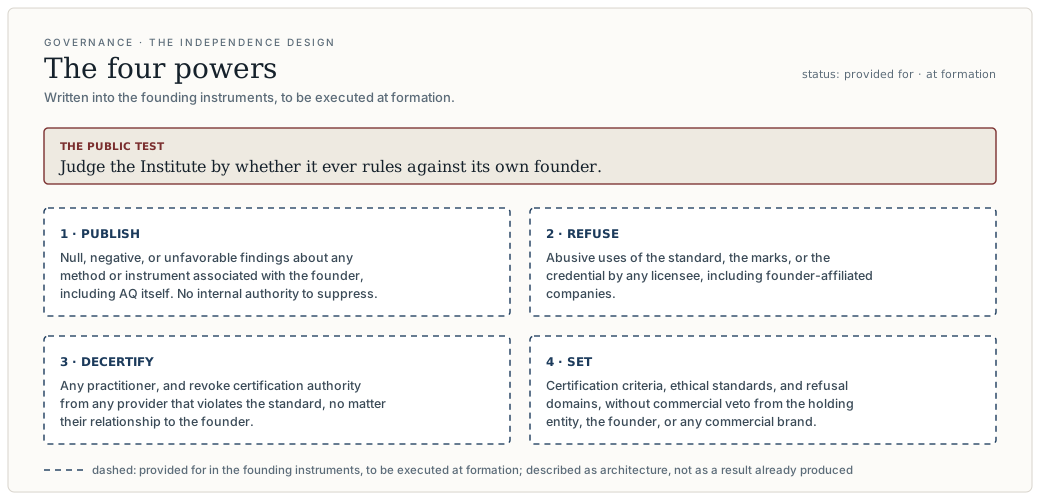
The single asset a richer competitor cannot fake is structural disinterest, a governance design that makes the Institute not merely permitted but obligated and unstoppable in publishing a result that does not flatter the people who benefit from a favorable one. Four powers are written into the founding instruments, to be executed at formation, to make that real:
- Publish null, negative, or unfavorable findings about any method or instrument associated with the founder or any founder-affiliated commercial entity, including AQ itself.
- Refuse abusive uses of the standard, marks, or credential by any licensee, including founder-affiliated companies.
- Decertify Certified Agency Engineer practitioners and revoke certification authority from any provider, including founder-affiliated entities, that violates the standard.
- Set certification criteria, ethical standards, and refusal domains without commercial veto from the commercial holding entity, the founder, or any commercial brand.
The negative-finding power covers founder-affiliated methods without exception: the Institute is intended to be free to rule against the very methods it is being established to study. This is designed into the founding instruments, to be executed at formation, described here as architecture, not as a result already produced.
Continue: Read the working papers
Who owns what, the clean split
[ Marks: RESERVED, trademarks/credential, not an evidence claim ]
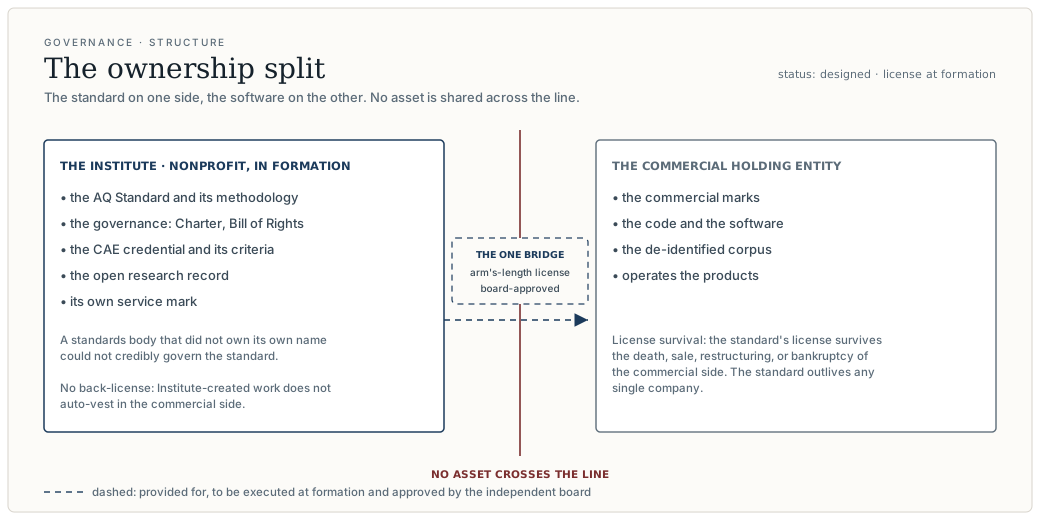
The ownership split is stated openly because stating it openly is itself the trust signal; secrecy would read as capture. The body that sets the standard does not own the businesses built on it.
The Institute is to own:
- the AQ Standard specification,
- the governance, the Charter and the Agency Bill of Rights,
- the Certified Agency Engineer (CAE) credential, its registry, and its revocation authority,
- the research and the working papers,
- and its own service mark.
The commercial marks, the code, and the de-identified corpus are to sit with a separate holding entity. The software that administers the standard is to be built and operated by that separate entity, not by the Institute. The Institute owns none of the commercial or software assets; the holding entity owns none of the standard, the governance, the credential, or the Institute's name. The Institute holds defined research access to the de-identified corpus, governed by the Charter's data firewall.
This separation is the structural reason the powers above can be exercised: the standard-setter has no commercial inventory to protect, so it has nothing to lose by publishing an unfavorable finding.
Governance Status
Governance status, stated plainly. [ Status: in formation, entity, board, and license not yet executed ]
The Institute's whole moat is status-honesty, so the page holds to it about itself:
- Entity: being established as a 501(c)(3), not yet registered.
- Founding date: the seal reads EST. ____ until the entity is registered; no founding year is asserted.
- Board: the Charter requires an independent board majority of three or more non-family members; board formation is in progress; no member is seated or named.
- Founder Sunset / no-back-license / license survival: provided for in the founding instruments, to be executed at formation.
- Validation: AQ's evidence tier is
[hypothesis-grade]; its reliability and predictive validity are not yet established, and validation is planned to be independent and pre-registered. No methods partner is engaged or named.